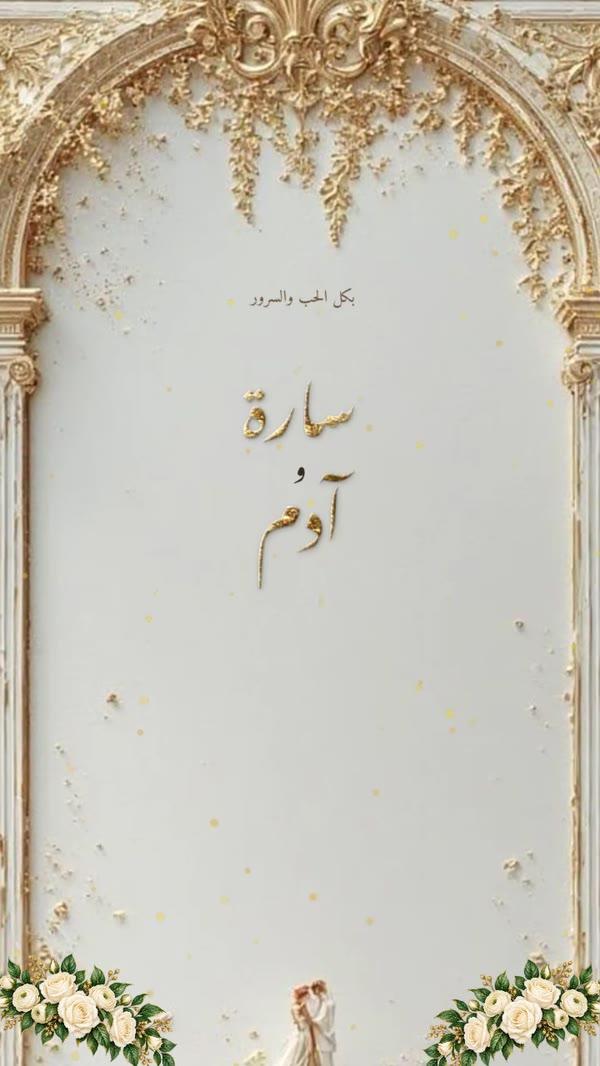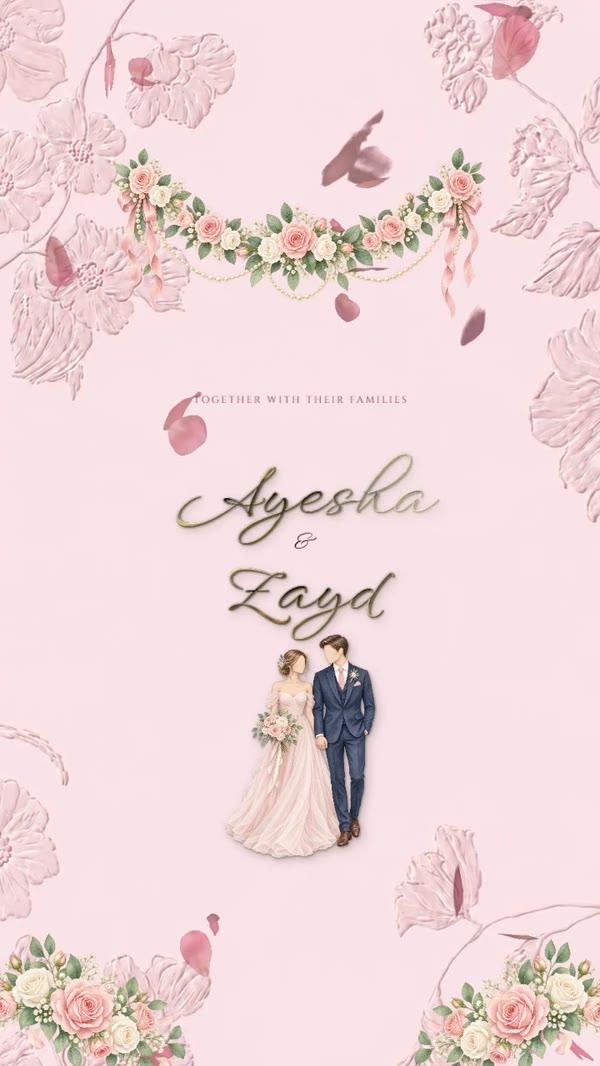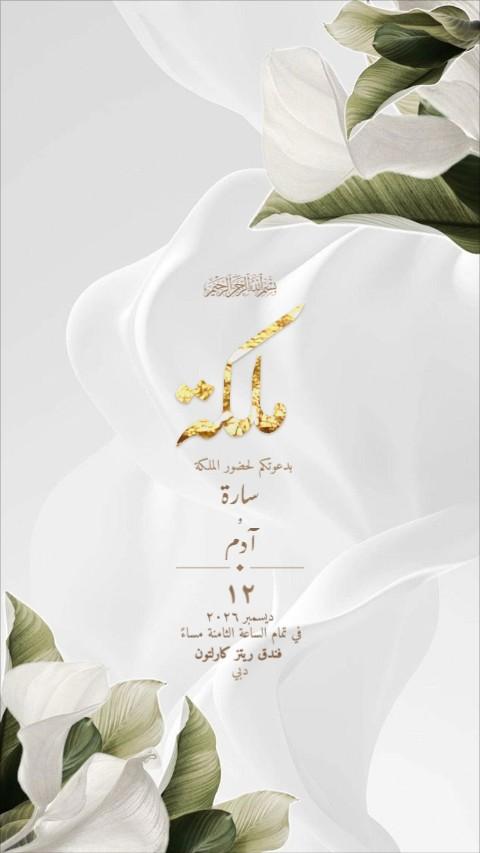
Wording
Mehndi invitation wording and henna night cards
Published 6 min read
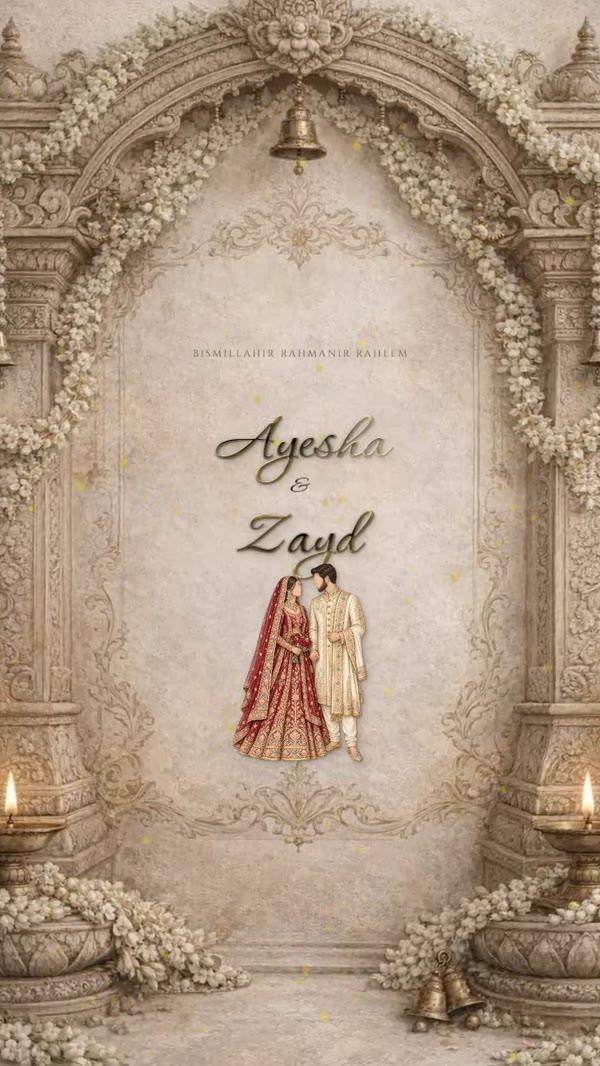
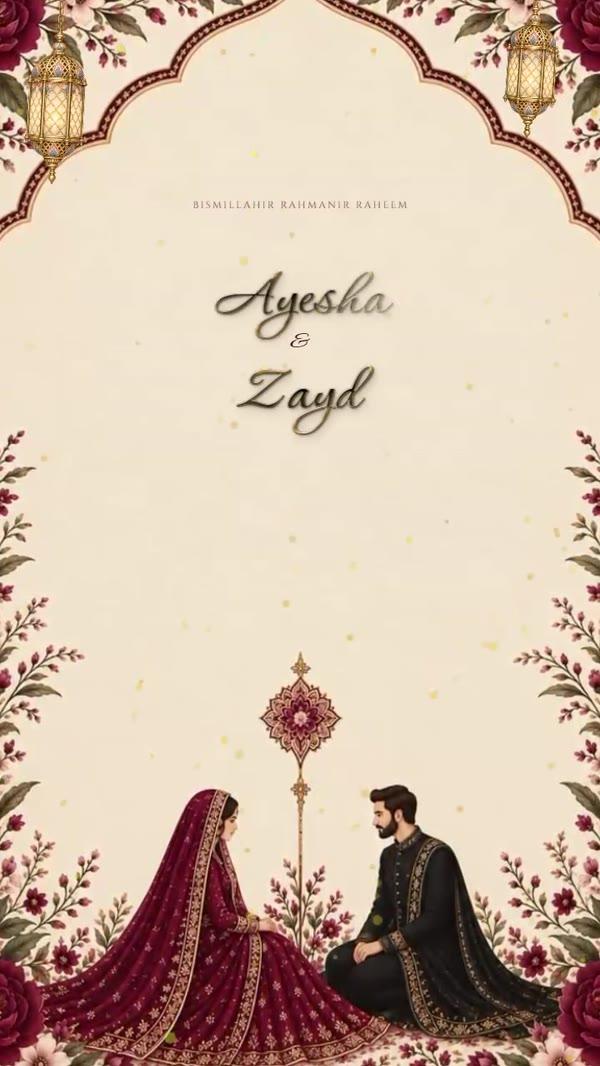
Mehndi invitation wording sets the tone for the most relaxed night of the wedding: the henna, the music, the women of both families finally in one room. In the UAE that night has two traditions living side by side — the Gulf henna night (ليلة الحناء) hosted for the bride by her mother and sisters, and the South Asian mehndi with its dholki songs and yellow and green outfits. Below is wording for both: formal and playful English cards, Arabic lines for the henna night, short WhatsApp messages, and the practical notes (ladies only, dress code, phones) that belong on the card.
In this article
- Henna night or mehndi: who sends the card, and who is invited
- Mehndi invitation wording in English: formal
- Mehndi invitation wording that is fun (and from the sister)
- Mehndi invitation message for WhatsApp
- Dholki and sangeet invitation lines
- One card for every function
- Dress code, ladies only and phones
- Henna night wording in Arabic (for Gulf families)
- How to make the henna or mehndi card
Henna night or mehndi: who sends the card, and who is invited
Before you choose words, settle who the card is from. It changes every line.
| Gulf henna night (ليلة الحناء) | South Asian mehndi | |
|---|---|---|
| Hosted by | The bride's mother, sometimes with her sisters | The bride's family, often a separate one by the groom's family |
| Guests | Women only, as a rule | Mixed or ladies-only, depending on the family |
| When | A night or two before the wedding | One to three days before the nikah or baraat |
| Feel of the card | Warm, decorative, Arabic first | Bright and playful, English first, Urdu or Hindi lines welcome |
| Usual colours | Burgundy, gold, blush, green | Yellow, green, marigold orange, pink |
If the groom's side holds its own henna (حناء العريس, or a mehndi for the groom), it gets its own card, from his mother or sisters. A ladies-only night should say so plainly on the card — guests read it as a courtesy, not a rule.
Mehndi invitation wording in English: formal
Formal wording works when the card comes from the parents and the guest list includes elders and family friends. Keep the structure of a wedding card — host, invitation, names, date, place — and let the design carry the colour.
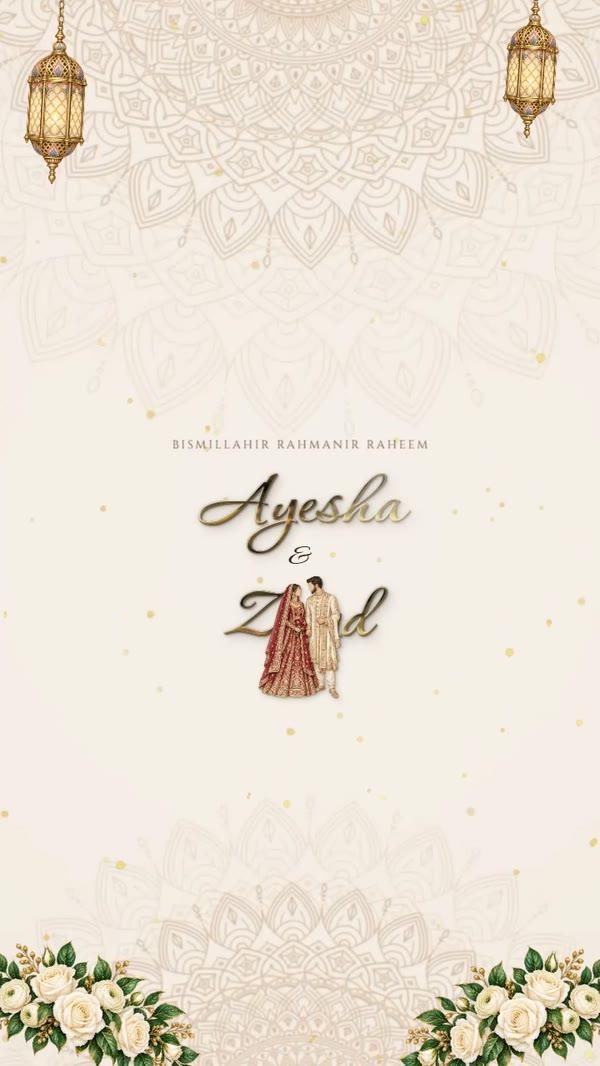
Mr. and Mrs. Imran Siddiqui request the pleasure of your company at the Mehndi of their daughter Ayesha Thursday, 10 December 2026, from 7:30 pm The Grand Ballroom, Al Habtoor Palace, Dubai
With joy, the family of Zayd Rahman invites you to celebrate his Mehndi night Wednesday, 9 December 2026 · 8:00 pm Our home, Al Barsha 2, Dubai
Together with their families Ayesha & Zayd invite you to a joint Mehndi celebration Friday, 11 December 2026 at 7:00 pm Jumeirah Creekside Hotel, Dubai Colours of the night: yellow and green
Mehndi invitation wording that is fun (and from the sister)
The mehndi is the night for personality. Searches for “mehndi invitation from sister” are common for a reason: the sisters and cousins usually plan it, and the card can sound like them.
Henna, dhol and a lot of dancing — the sisters of the bride invite you to Ayesha's Mehndi! Thursday, 10 December · 8:00 pm Come hungry, come in yellow.
The countdown is on! Join us for an evening of mehndi, music and mithai as we celebrate Sana before she says Qubool Hai. Saturday, 12 December 2026 · 7:30 pm The Courtyard, Sharjah
Mehndi invitation message for WhatsApp
Most mehndi cards in the UAE travel on WhatsApp. The card holds the details, so the message only has to greet the person and invite them. Add the name of the guest when you can; a message that starts with “Dear Rabia” feels personal, one that starts with “Dear all” feels forwarded.
Dear Rabia, Ayesha's Mehndi is on Thursday 10 December and it wouldn't be the same without you! Card attached — wear something yellow 💛
Assalamu alaikum Khala, we would be honoured to have you at Ayesha's Mehndi on Thursday 10 December at 7:30 pm. The invitation card is attached. Please let us know if you can come.
If you are sending to many people, read how to send your wedding invitation to many guests on WhatsApp before you start forwarding one by one.
Dholki and sangeet invitation lines
Dholki nights are smaller and often at home, sometimes several in the weeks before the wedding. One or two lines are enough — the invitation is mostly a date and a doorbell.
- “Dholki at ours! Thursday after Isha — bring your voice, we'll bring the chai.”
- “Join us for Ayesha's dholki: songs, tapes and a lot of laughing. Friday, 9 pm.”
- “Sangeet night: two families, one dance floor. Saturday 12 December, 8 pm.”
One card for every function
Many families send a single card for the mehndi, nikah and walima, with each function on its own line. It saves guests from three separate cards, but only works if each line answers who is invited to what.
Mehndi · Thursday 10 December · 7:30 pm · Al Habtoor Palace (ladies) Nikah · Friday 11 December · after Asr · Al Farooq Omar Bin Al Khattab Mosque Walima · Saturday 12 December · 8:00 pm · Jumeirah Creekside Hotel
For the wording of the other functions, see nikah and walima invitation messages. If not every guest is invited to every function, send separate cards rather than one card with notes in small print.
Dress code, ladies only and phones
The mehndi is where these notes appear most. Keep them short, kind and at the foot of the card.
- “Ladies only” or “This is a ladies-only evening.”
- “Dress code: shades of yellow and green.”
- “Kindly keep phones away during the evening — our photographer has it covered.”
- “We love your little ones, but this is an adults-only night.”
For more ways to word these politely, in Arabic and English, see wedding card rules: no kids, no phones.
Henna night wording in Arabic (for Gulf families)
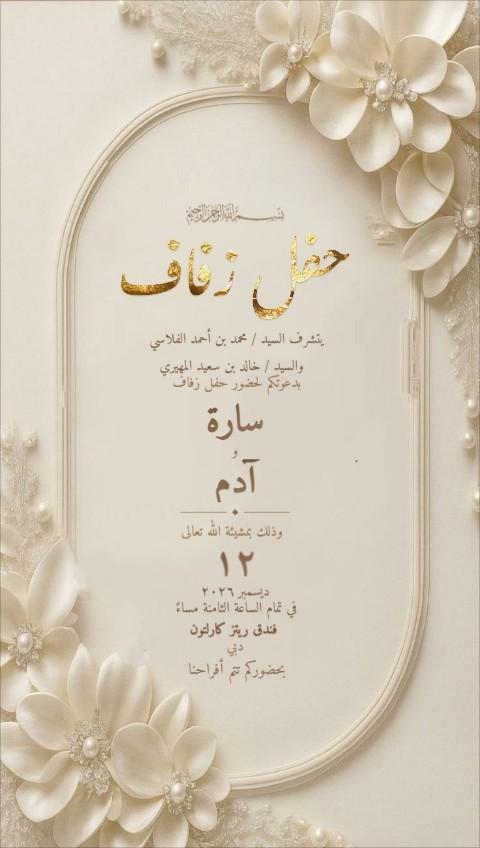
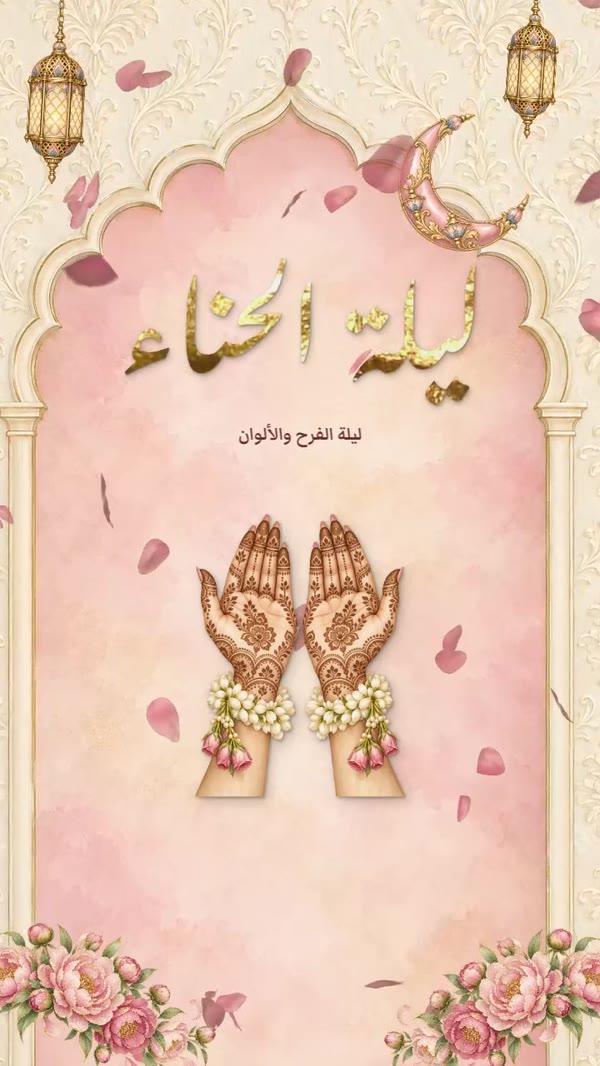
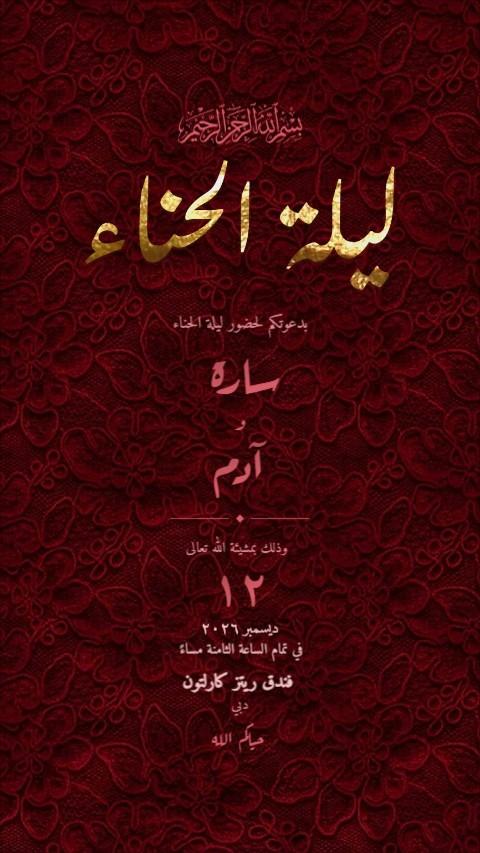
If your guests read Arabic, write the henna card in Arabic first — it is what the bride's mother's friends expect. The classic structure is “تتشرف” followed by the mother's name, then the invitation.
تتشرف أم سلطان بدعوتكن لحضور حفل حناء ابنتها مريم وذلك مساء يوم الأربعاء 9 ديسمبر 2026 في قاعة الياسمين، دبي بحضوركن تكتمل فرحتنا
How to make the henna or mehndi card
- Open the henna night designs and choose a card — still, or moving with music.
- Write the host line, the bride's name and the details; Arabic and English can sit on the same card.
- Add the ladies-only or dress code line at the foot of the card.
- Download it as a picture or a video. Free designs download without a watermark; premium designs come with the PRO plan (AED 15 for 30 days, one payment).
- Share it on WhatsApp with a personal message from the examples above.
Ready when you are
Questions people ask
What do you write on a mehndi invitation?
Who it is from, the words “Mehndi” or “Mehndi night”, the bride's or groom's name, the day, date, time and place. Add a dress code or ladies-only line if it applies. Everything else is tone.
Who sends the mehndi invitation?
Usually the bride's family for her mehndi and the groom's family for his. Sisters and cousins often send it on WhatsApp, which is why “mehndi invitation from sister” wording is popular.
Can I write a mehndi invitation in Urdu or Hindi too?
Yes. Many families add a single line of Urdu or Hindi to an English card — a blessing or a song line — which reads warmly and keeps the details clear for everyone.
Is a henna night only for women?
In the Gulf, the bride's henna night is traditionally for women. South Asian mehndis are often mixed. Say it on the card either way, so nobody has to ask.