Design
The best Arabic font for wedding invitation cards
Published 6 min read
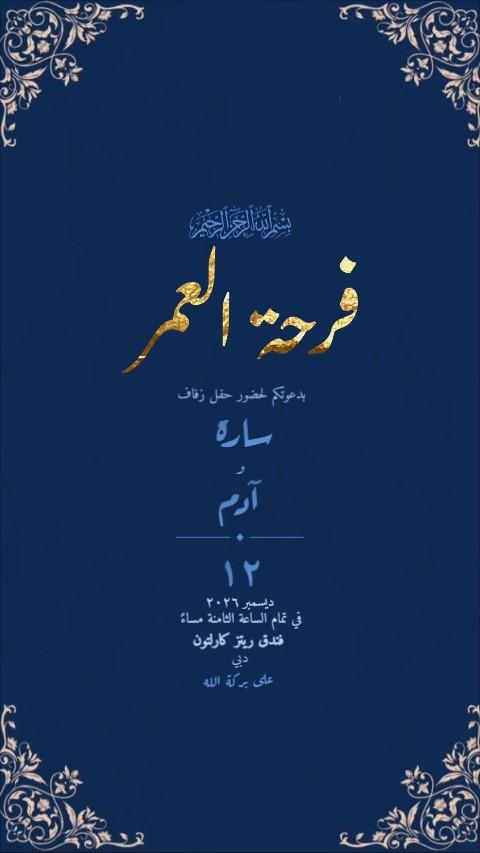
The best Arabic font for wedding invitation cards depends on what you want the card to say before anyone reads a word. A Thuluth heading feels ceremonial, Diwani royal, Ruqaa personal, Naskh classic and clear, and modern Kufi contemporary. This guide explains each style, how to pair Arabic with English, and how to keep everything readable on a phone.
In this article
- Which Arabic calligraphy style says what
- Naskh: the safest Arabic font for wedding invitation text
- Thuluth and Diwani: the ceremonial styles
- Ruqaa and Nastaliq: personal and poetic
- Kufi and modern Arabic fonts
- Pairing Arabic with English on a bilingual card
- Names in Arabic calligraphy: a calligrapher, the library or AI
- Readable at WhatsApp size
- Free vs licensed Arabic fonts
- Examples from the studio library
Which Arabic calligraphy style says what
Six Arabic calligraphy styles appear on wedding cards again and again. Each grew out of a different use and still carries that feeling.
| Style | What it feels like | Best used for |
|---|---|---|
| Naskh (نسخ) | Classic, clear, trustworthy — the style of printed books | The body text: names of the families, date, venue, verses |
| Thuluth (ثلث) | Grand and ceremonial — the style of mosque inscriptions | The Bismillah and a single heading word or phrase |
| Diwani (ديواني) | Royal, flowing, romantic — born in the Ottoman court | The couple's names or a title such as ليلة العمر |
| Ruqaa (رقعة) | Personal and warm — the hand most people write in | Names on a modern or intimate card; short phrases |
| Kufi (كوفي) | Geometric and modern, with very old roots | Monograms, minimal cards, corporate and contemporary events |
| Nastaliq (نستعليق) | Soft, hanging, poetic — the hand of Persian and Urdu | Names and verses on Pakistani, Indian and Persian-family cards |
A useful rule: one calligraphic style for the heading or names, one clear style for the details. Two decorative styles on the same card compete; a decorative heading with clean Naskh underneath looks deliberate.
Naskh: the safest Arabic font for wedding invitation text
Naskh is the rounded, legible style of printed books. On a wedding card it carries everything people need to read: the families' names, the date, the time and the hall. If you choose only one Arabic font, choose a good Naskh.
In the studio, Amiri is the default Arabic face — a classical Naskh modelled on the type of the Bulaq press in Cairo. Scheherazade and Lateef are other Naskh faces on the card, and the font library adds Noto Naskh Arabic and Markazi Text.
Thuluth and Diwani: the ceremonial styles
Thuluth is large and majestic — the style of mosque inscriptions and the opening Bismillah of many Gulf wedding cards. Diwani developed in the Ottoman chancery for royal decrees; its dense, flowing letters are why people search for “خط ديواني” when they want their names to look regal.
Both depend on how a calligrapher stacks and balances the letters, so the best Thuluth and Diwani on wedding cards are calligraphy pieces, not typed text. Use them for a word or two — a Bismillah, ليلة العمر, or the couple's names — never for the details.
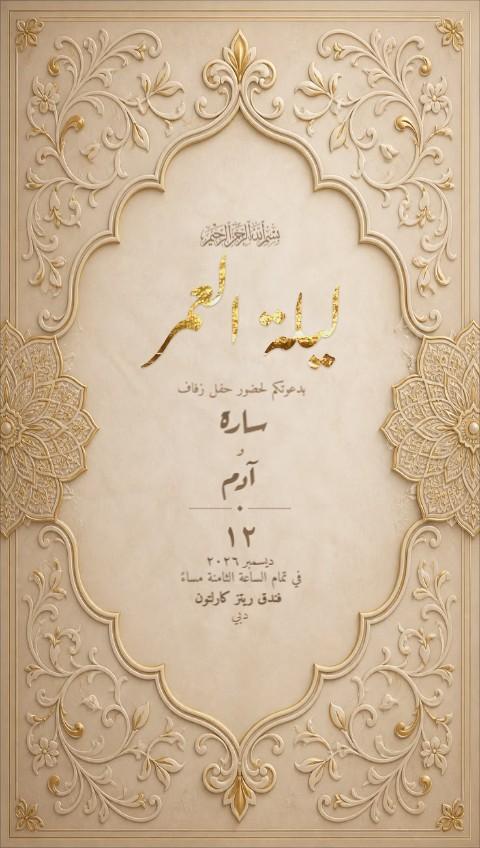
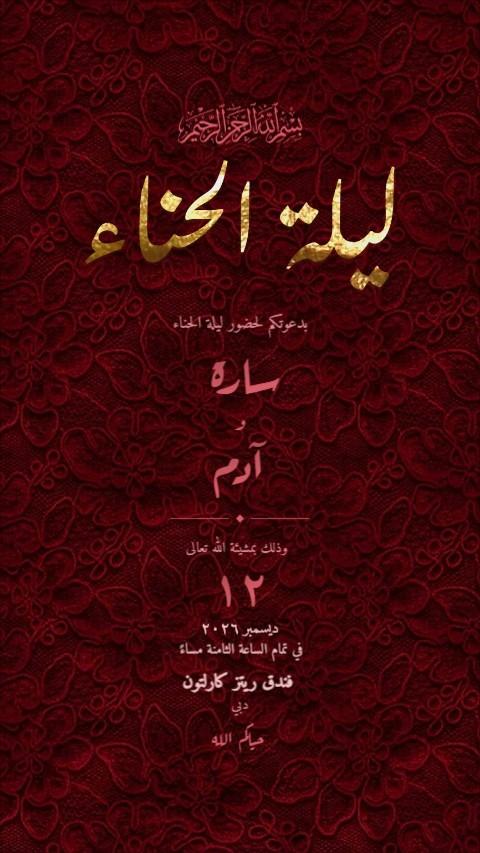
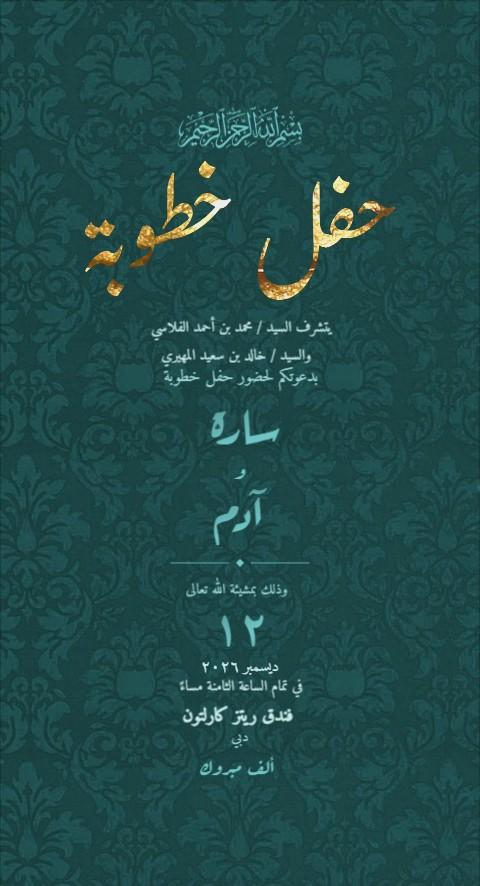
In the studio, ready-made calligraphy pieces — such as a Bismillah in Thuluth — are in the calligraphy library with the PRO plan (AED 15 for 30 days, one payment).
Ruqaa and Nastaliq: personal and poetic
Ruqaa is the everyday hand most Arabic speakers write in. On a card it feels like the couple wrote their own names — lovely for a modern card, a henna night or an engagement. The studio's Ruqaa name font (Aref Ruqaa) is free to use.
Nastaliq is the script of Persian and Urdu, and the natural choice for Pakistani and Indian Muslim families. The studio offers Nastaliq (Gulzar) for names, plus Noto Nastaliq in the font library. Give it room — it sweeps wider than other styles.
Kufi and modern Arabic fonts
Kufi, named after the city of Kufa, is among the oldest Arabic styles. Modern geometric Kufi is everywhere in Gulf branding and suits minimal cards and monograms.
- Kufi faces in the studio library: Reem Kufi, Noto Kufi Arabic, Kufam, El Messiri, Changa and Qahiri.
- Modern sans faces for clean details: Almarai and Tajawal on the card itself, plus Cairo, Readex Pro, IBM Plex Arabic and many more in the library.
Modern sans fonts are excellent for the small print — RSVP lines, dress code, location — where calligraphic styles blur.
Pairing Arabic with English on a bilingual card
Most UAE weddings send a bilingual card. Match the mood of the two scripts, not the shape:
| Arabic | English to pair with | Mood |
|---|---|---|
| Diwani or Thuluth heading + Amiri (Naskh) | Cinzel for the heading, Cormorant for the text | Royal, classic |
| Ruqaa names | Great Vibes or Allura names | Romantic, personal |
| Nastaliq (Gulzar) names | Pinyon or Parisienne names | Soft, poetic |
| Reem Kufi or El Messiri | Cinzel or Marcellus | Modern, architectural |
| Almarai or Tajawal | Montserrat or Jost | Minimal, contemporary |
Give both languages the same weight, keep Arabic on the right or on top, and use one expressive face per language.
Names in Arabic calligraphy: a calligrapher, the library or AI
The couple's names are where calligraphy matters most, and there are three ways to get them:
- Type them in a calligraphic font (Ruqaa, Nastaliq, Mirza) — free in the studio, instant, and you can change the font any time.
- Use the AI calligraphy tool (MAX plan, AED 30): it takes your names as you typed them and turns them into a finished piece — raised gold leaf, reed-pen ink, emerald enamel, pearls, henna and more — while keeping your letters and dots as you wrote them. Check the result before you place it, as with any AI image.
- Commission a calligrapher for a one-of-a-kind Diwani or Thuluth composition, then place it on the card. Ask for a high-resolution file with a transparent background.
Readable at WhatsApp size
Most UAE wedding cards are read on a phone, where a Diwani title can turn into a gold smudge. Test the card at its real size:
- Open the downloaded card on your phone and read the date and venue at arm's length.
- Keep calligraphy for large text only: the heading and the names.
- Set the date, time and venue in Naskh or a modern sans, never in Diwani or Nastaliq.
- Give gold text enough contrast: gold on ivory needs a darker gold than gold on navy.
For the right pixel sizes for WhatsApp and Instagram, see invitation card sizes.
Free vs licensed Arabic fonts
Some popular Diwani and Thuluth fonts on free download sites are commercial fonts shared without permission. If you print or sell cards, check every font's licence.
Every font in the studio's library is released under the SIL Open Font License and is free to use on your card — you only pay for premium designs, the calligraphy library and finishes (PRO) or AI calligraphy (MAX).
Examples from the studio library
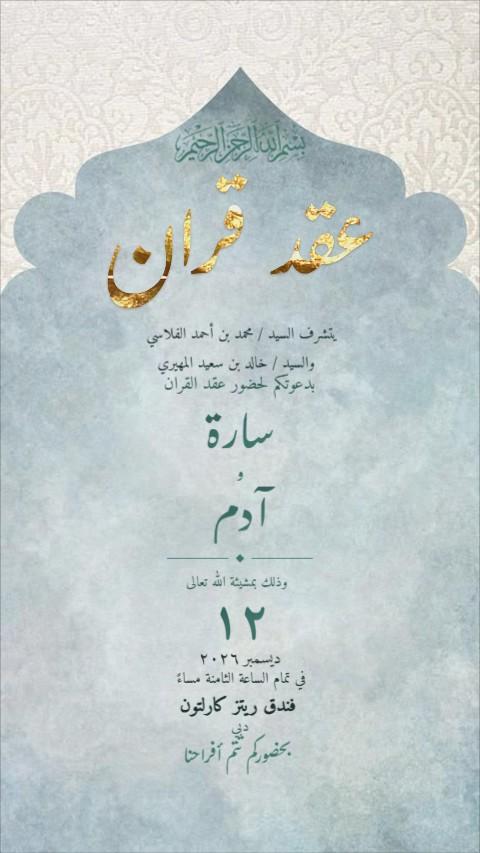
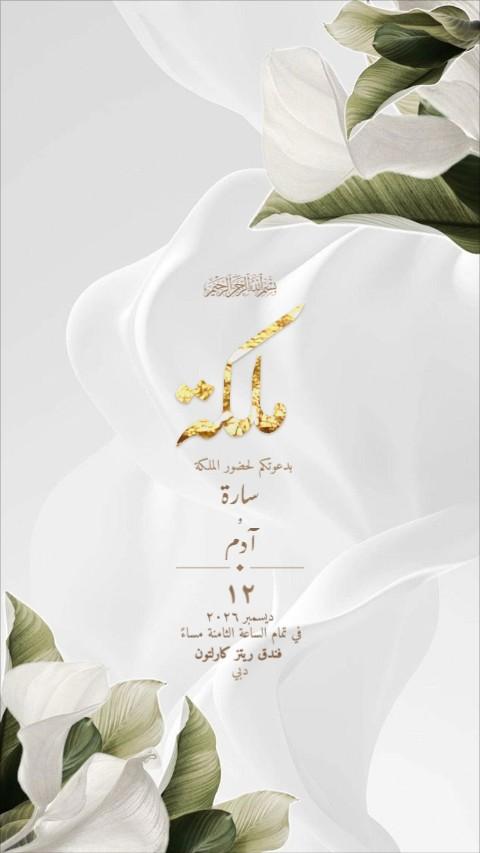
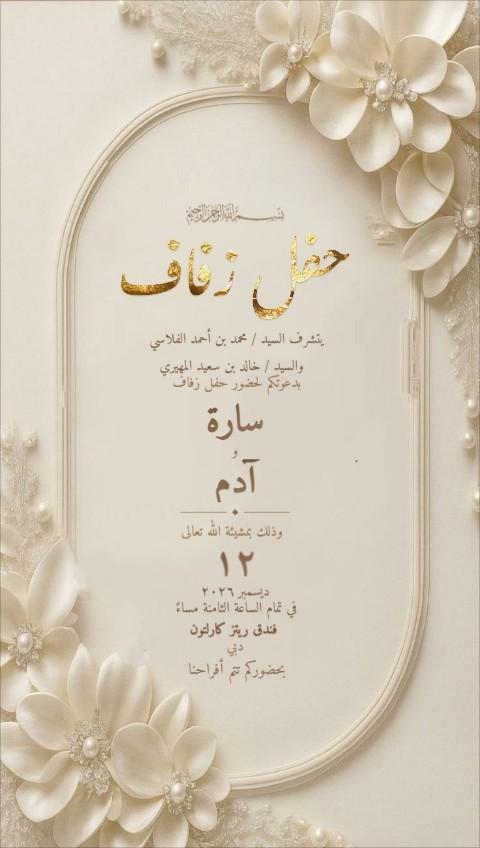
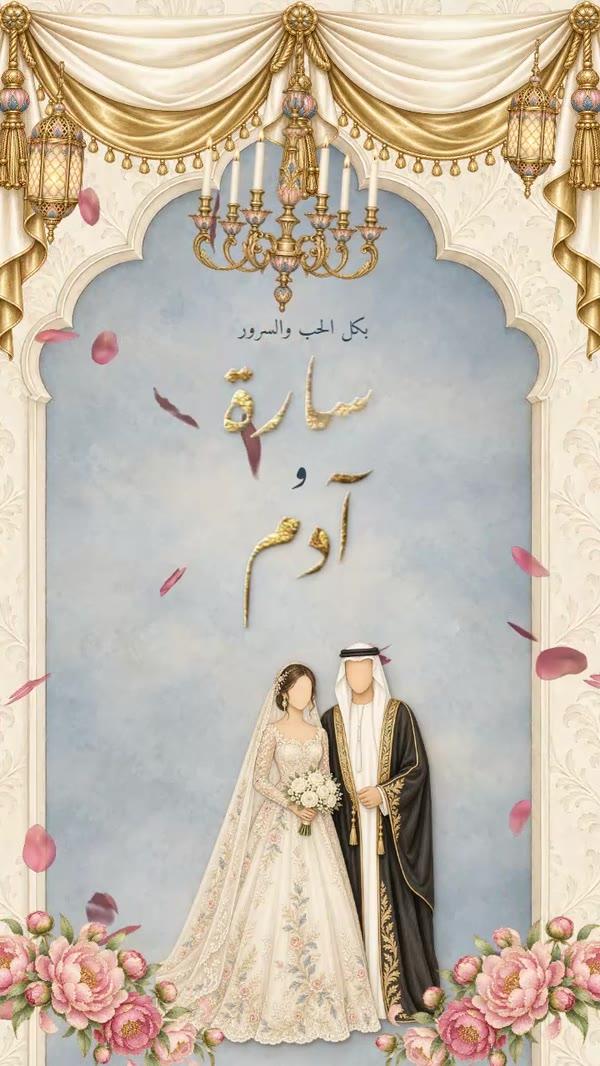
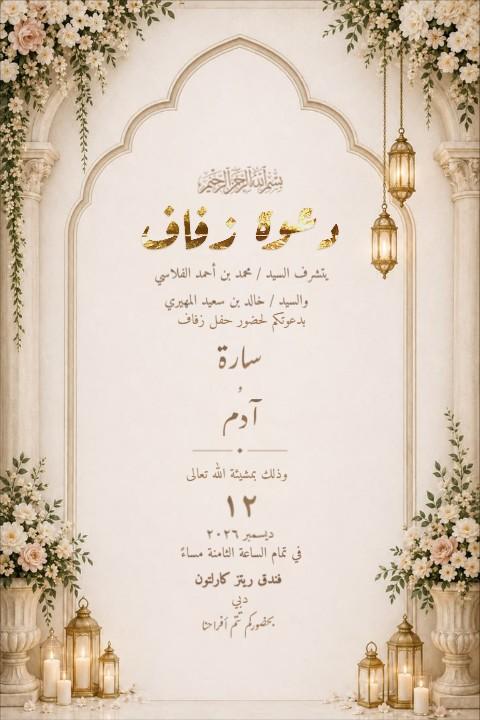
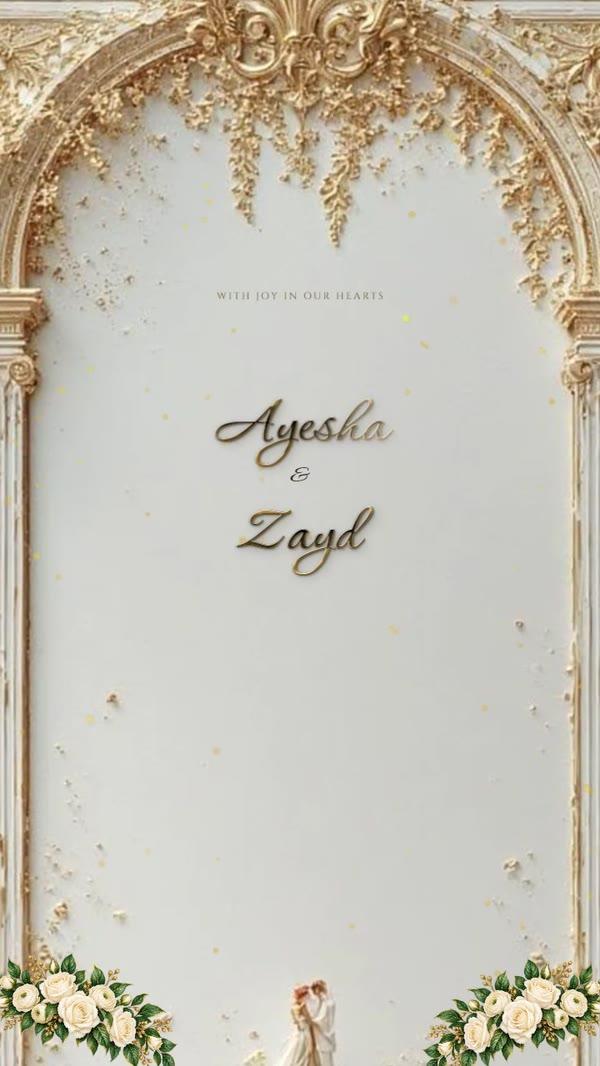
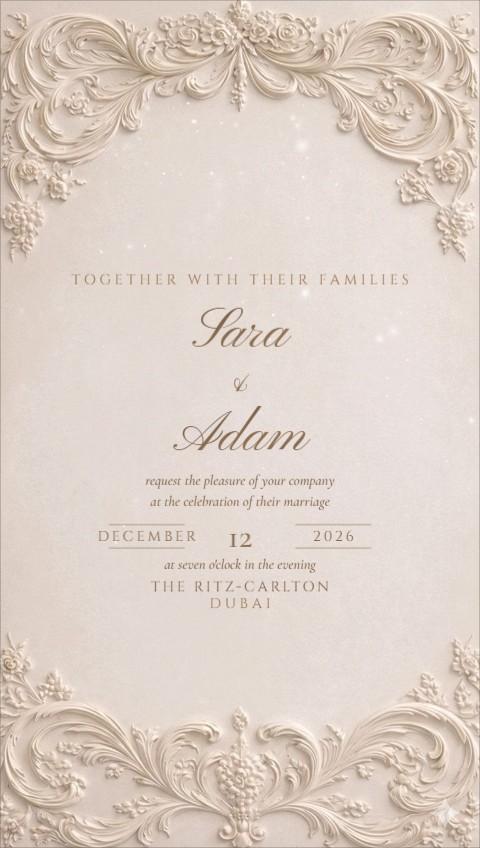
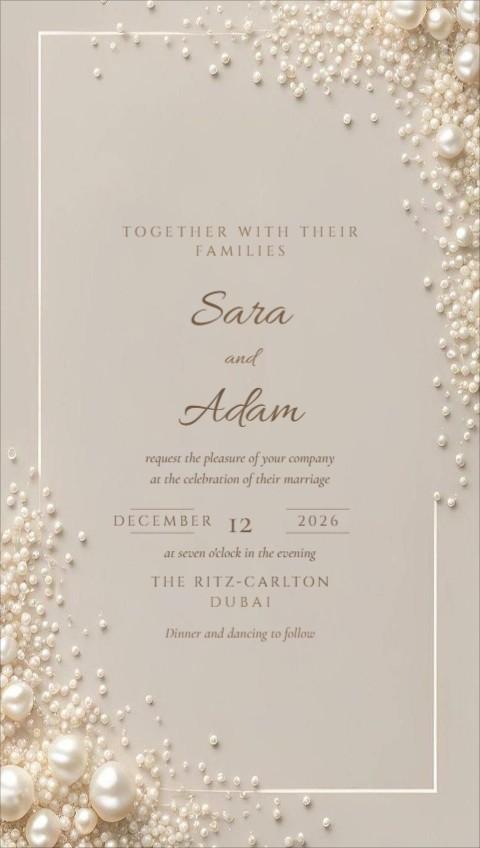
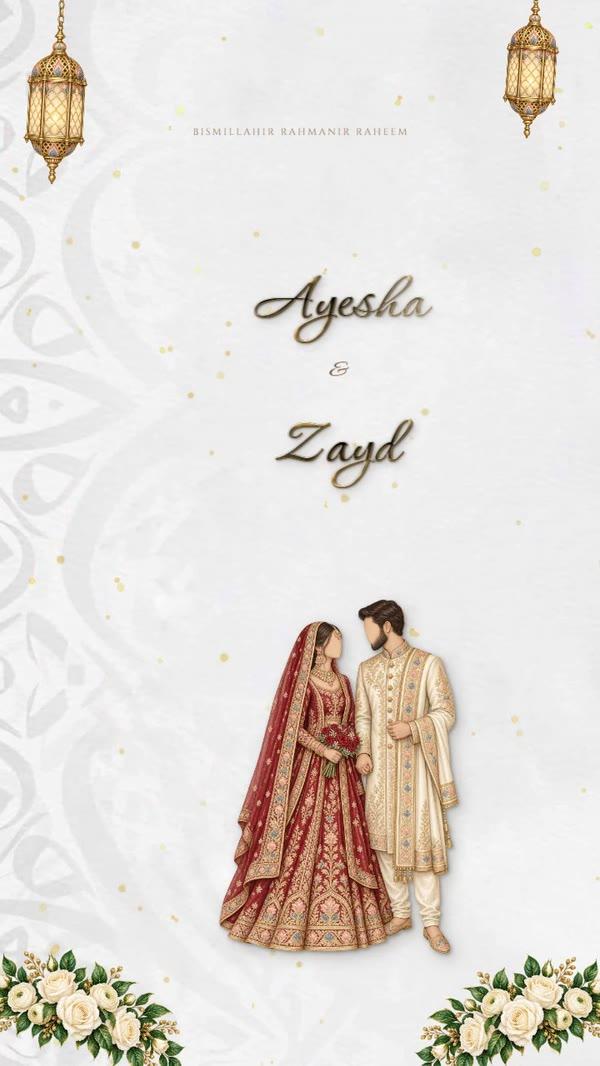
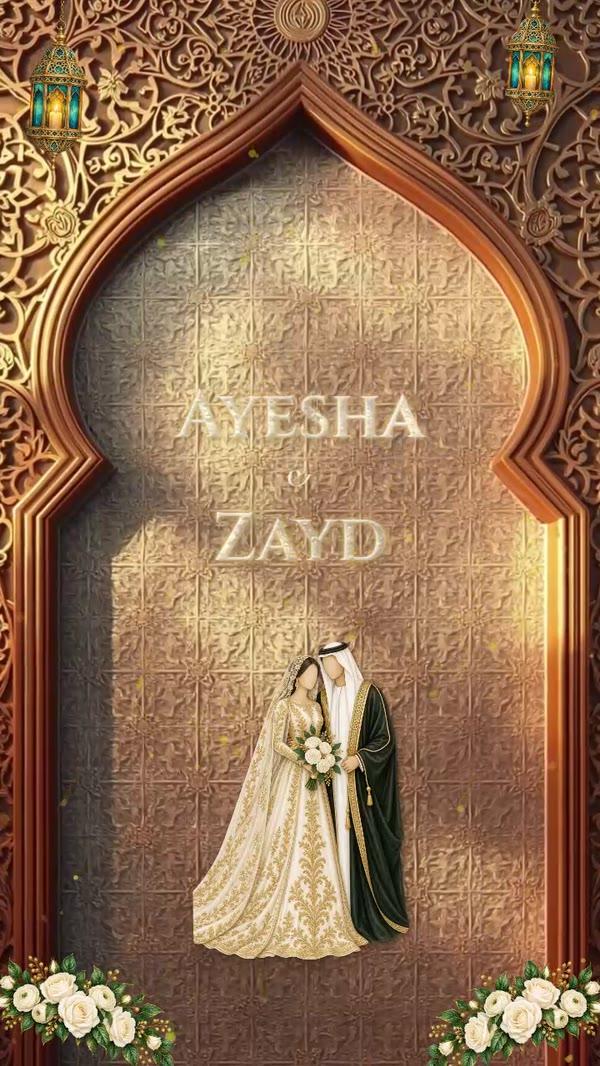
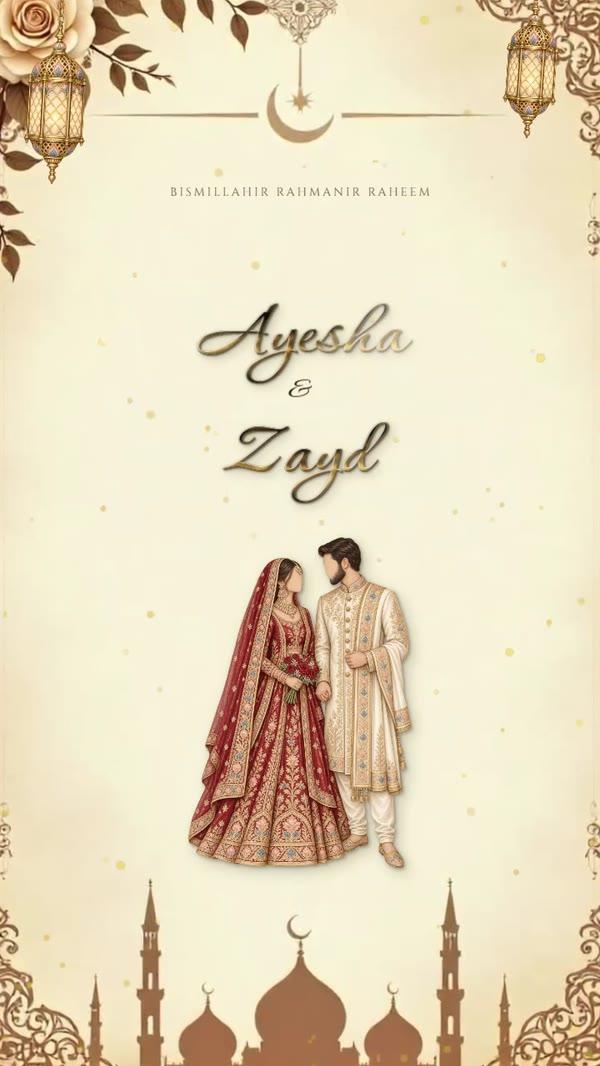
Every design in the Design your card studio can be set in Arabic, English or both, with the fonts above. Free designs download without a watermark as a picture, PDF, GIF or video. For wording to go with your fonts, see Arabic wedding invitation wording and how to make an electronic wedding invitation.
Ready when you are
Questions people ask
What is the best Arabic font for a wedding invitation?
Use a calligraphic style (Diwani, Thuluth, Ruqaa or Nastaliq) for the heading and names, and a clear Naskh such as Amiri for the date, time and venue. That pairing looks elegant and stays readable on a phone.
Which Arabic calligraphy is used on wedding cards?
Thuluth for the Bismillah and ceremonial headings, Diwani for royal-looking names and titles, Ruqaa for personal modern cards, Nastaliq on Pakistani and Indian Muslim cards, and Naskh for the text.
Can I write our names in Arabic calligraphy for free?
Yes — the studio's calligraphic name fonts, such as Ruqaa and Nastaliq, are free. For finished pieces in gold leaf or ink, the AI calligraphy tool is on the MAX plan (AED 30).