Wording
Wedding invitation in Arabic: the classic Gulf wording
Published Updated 4 min read
A wedding invitation in Arabic follows a form most families in the Gulf know by heart: the host, the honour of inviting, the groom by name and the bride by her family. Here is that form, line by line, with the phrases that fill it, ready-made formal, short and family versions, and what each line means in English — useful whether you are writing the card yourself or checking the Arabic side of a bilingual one.
In this article
How to write a wedding invitation in Arabic: the classic structure
- An opening verse or blessing (optional)
- The host: "يتشرف" (… is honoured) followed by the father's or family's name
- The invitation: "بدعوتكم لحضور حفل زفاف نجله" (to invite you to the wedding of his son)
- The groom's name
- The bride by her father's name: "على كريمة" (to the daughter of …)
- Day, date and time, often with "وذلك بمشيئة الله" (God willing)
- The venue and city
- A closing line: "بحضوركم تكتمل فرحتنا" (your presence completes our joy)
يتشرف أحمد بن سعيد المنصوري بدعوتكم لحضور حفل زفاف نجله خالد على كريمة عبدالله بن محمد الكعبي وذلك بمشيئة الله مساء يوم السبت 14 نوفمبر 2026 في قصر الإمارات، أبوظبي بحضوركم تكتمل فرحتنا
Formal, short and family versions
The same structure stretches or shrinks. The formal version keeps every line and is the usual choice for the men's card. The short version suits a WhatsApp message or a small card. The family version is sent in both families' names and reads warmer.
يتشرف عبدالله بن محمد الكعبي بدعوتكم لحضور حفل زفاف كريمته على الشاب خالد بن أحمد المنصوري وذلك بمشيئة الله يوم السبت 14 نوفمبر 2026 في قصر الإمارات، أبوظبي
يسعدنا دعوتكم لحضور حفل زفاف خالد وكريمة آل الكعبي السبت 14 نوفمبر 2026 · قصر الإمارات
تتشرف عائلتا المنصوري والكعبي بدعوتكم لمشاركتهما فرحة زفاف خالد ومريم يوم السبت 14 نوفمبر 2026 قصر الإمارات، أبوظبي بحضوركم تكتمل فرحتنا
Why the bride is named by her family
On many Gulf cards — especially the men's — the bride is named through her father, "على كريمة …", rather than by her own name. It is a mark of respect and privacy, and it is the expected form; ladies' cards more often give her name. Both are correct: write whichever your families prefer.
Verses and duas to open with
﴿وَمِنْ آيَاتِهِ أَنْ خَلَقَ لَكُم مِّنْ أَنفُسِكُمْ أَزْوَاجًا لِّتَسْكُنُوا إِلَيْهَا وَجَعَلَ بَيْنَكُم مَّوَدَّةً وَرَحْمَةً﴾
بارك الله لكما وبارك عليكما وجمع بينكما في خير
If the card carries a verse, print it where it won't be cut off or thrown away carelessly — many families prefer the dua on cards that will be handed around, and keep the verse for the digital card.
Men's cards and ladies' cards
When the men's and ladies' celebrations are held apart, families send two cards. The men's card is usually the formal one in the father's name. The ladies' card is often sent by the mother, may name the bride, and adds a line such as "الحفل للسيدات فقط" (ladies only), "نعتذر عن اصطحاب الأطفال" (we regret we cannot host children) or a request not to take photos. More on this in men's and ladies' wedding invitations and polite card rules.
تتشرف أم خالد بدعوتكن لحضور حفل زفاف ابنها خالد يوم الجمعة 18 ديسمبر 2026 الساعة الثامنة مساءً قاعة الياسمين، دبي الحفل للسيدات فقط · نعتذر عن اصطحاب الأطفال
Useful phrases, translated
| Arabic | Meaning | Where it goes |
|---|---|---|
| يسعدنا ويشرفنا دعوتكم | We are delighted and honoured to invite you | Opening of a warmer card |
| نجله / كريمته | His son / his daughter (formal) | After the host's name |
| على الشاب | To the young man … | Bride's family card, before the groom's name |
| لمشاركتنا فرحتنا | To share our joy | After the invitation line |
| وذلك بمشيئة الله تعالى | God willing | Before the date |
| بعد صلاة العشاء | After the Isha prayer | Instead of a clock time |
| بحضوركم تكتمل فرحتنا | Your presence completes our joy | Closing line |
| نرجو تأكيد الحضور | Kindly confirm your attendance | Bottom of the card |
| الدعوة شخصية | This invitation is personal | Bottom line, small |
A bilingual card: Arabic and English together
Many UAE weddings mix Emirati, Arab and expat guests, so families either print both languages on one card or make two versions of the same design. If you put both on one card, keep the Arabic on the right and give each language the same weight; don't translate word for word — "على كريمة" becomes "to the daughter of", and "بحضوركم تكتمل فرحتنا" reads best as "your presence will complete our joy".
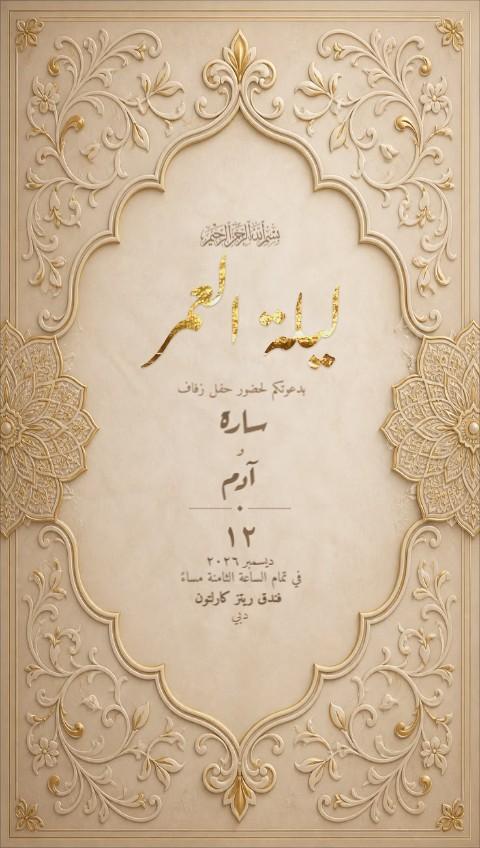
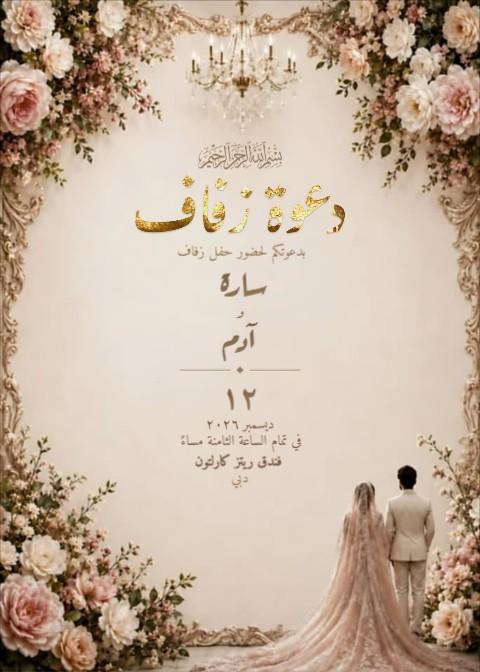
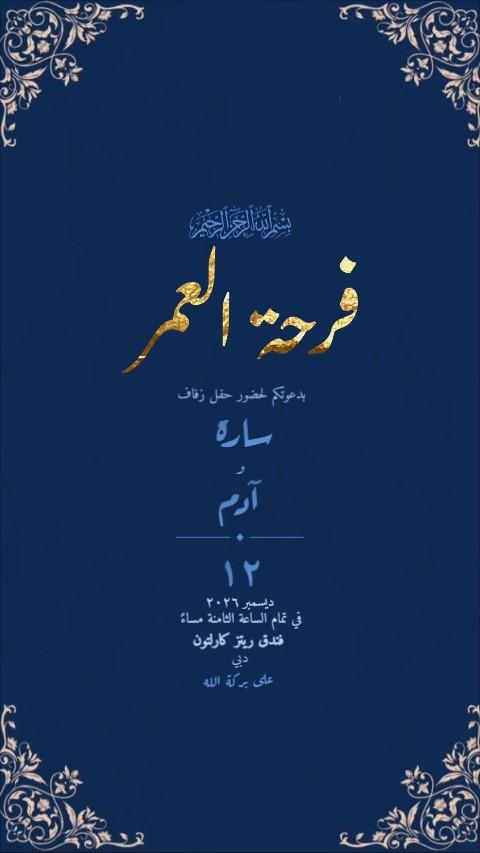
In the Invited studio you type the details in both languages and switch the card's language with one tap, so each guest can get the version they read. For the right lettering, see Arabic fonts for wedding invitations.
Ready when you are
Questions people ask
Can one card be in both Arabic and English?
Yes. Many families make the same design in both languages and send each guest the one they read. In the Invited studio you type the details in both and switch the card's language with one tap.
Is it wrong to write the bride's name on the card?
No. Naming the bride through her father is the traditional form, especially on men's cards, but plenty of families — and most ladies' cards — use her name. Follow what both families are comfortable with.
What does "يتشرف" mean on a wedding invitation in Arabic?
It means "is honoured": "يتشرف أحمد … بدعوتكم" is "Ahmed … is honoured to invite you". It is the standard formal opening of a Gulf wedding card.
How do I write the time on an Arabic wedding card?
Either a clock time ("الساعة الثامنة مساءً") or a prayer time ("بعد صلاة العشاء"). Men's cards often use the prayer; ladies' cards usually give a clock time.
Should the Arabic card have a Quran verse?
It's optional. Surat Ar-Rum 21 is the most used; many families use the Prophet's dua for newlyweds instead, especially on cards that are printed and handed around.